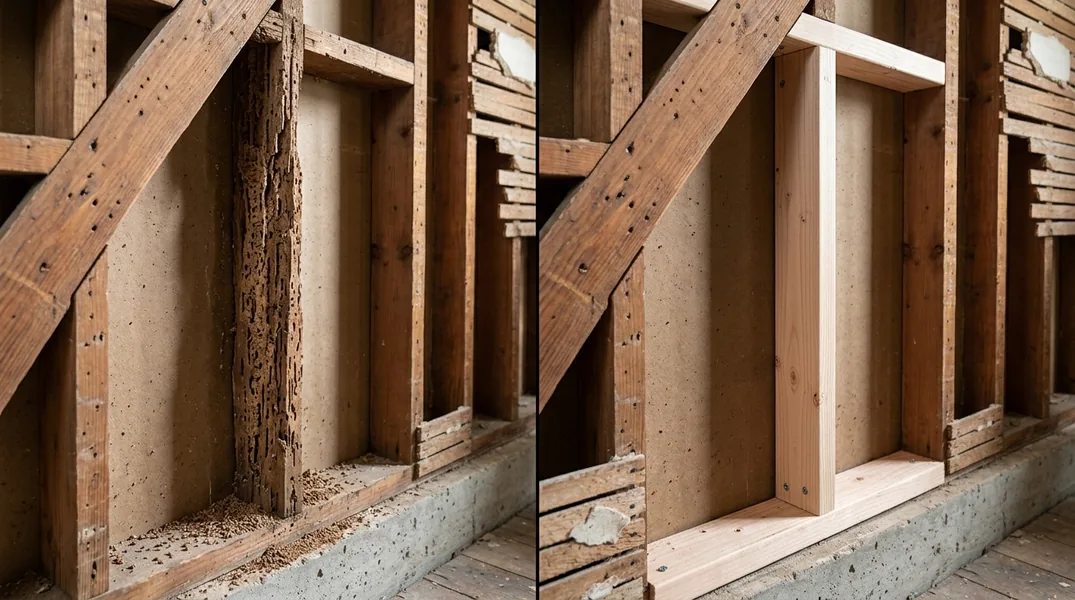
The Hard Truth: Most Homeowners Insurance Won't Cover Termite or Wood Rot Damage
If you've discovered termites in your San Jose home or noticed soft, deteriorating wood, your first instinct might be to file a homeowners insurance claim. Unfortunately, the answer you'll likely receive is disappointing: standard homeowners insurance policies do not cover termite damage or Wood Rot & Dry Rot Repair.
This exclusion exists because insurance companies classify termite damage and wood rot as preventable maintenance issues rather than sudden, accidental losses. From the insurer's perspective, a homeowner should have taken steps to prevent pest infestations and moisture problems through regular inspection and maintenance. Because these conditions develop gradually over time, they fall outside the scope of what homeowners insurance is designed to cover. Understanding this distinction is critical for San Jose homeowners who want to protect their investment and plan for necessary repairs.
Why Insurance Companies Exclude Termite Damage and Wood Rot
Homeowners insurance policies are structured around the concept of covering sudden, unexpected events that are beyond your control. A fire, a theft, or a tree falling on your roof are all covered because they happen without warning and without negligence on your part. Termite infestations and wood rot, by contrast, are considered the result of inadequate property maintenance and pest prevention measures.
Insurance companies argue that homeowners have the responsibility to maintain their properties, which includes regular inspections, proper drainage, ventilation, and pest control. If you allow moisture to accumulate in crawl spaces, fail to seal entry points, or neglect to inspect wooden structures, the resulting damage is viewed as foreseeable and preventable. Additionally, because wood rot and termite damage occur over months or years, they don't meet the definition of a sudden loss. This is why Termite Damage Repair costs typically fall entirely on the homeowner's shoulders.
Foundation Damage Insurance: A More Complex Scenario
Foundation damage is a different story than termite or wood rot damage, though the outcome is often similarly frustrating for homeowners. While standard homeowners policies exclude foundation damage in many cases, the reasoning is more nuanced. Some policies will cover foundation damage if it results from a covered peril, such as an earthquake, a burst pipe, or subsidence caused by a sudden event. However, most standard policies exclude foundation damage caused by settling, poor drainage, soil movement, or gradual water infiltration.
In San Jose, where the soil composition and seasonal water patterns can contribute to foundation stress, this exclusion is particularly relevant. If your foundation cracks due to normal settling or long-term moisture issues, your insurance company will likely deny the claim. However, if a sudden event like an earthquake or a major plumbing failure causes the damage, you may have coverage. The key is understanding what triggered the damage and whether that trigger qualifies as a covered event under your specific policy.
What Homeowners Insurance Actually Covers: Secondary Damage and Exceptions
While direct termite damage and wood rot are excluded, homeowners insurance may cover damage that results from a covered peril. For example, if a pipe bursts and causes water damage that leads to wood rot, the water damage itself might be covered (depending on your policy). Similarly, if high winds damage your roof and allow water to seep in, causing rot in the underlying framing, the initial wind damage is covered. The distinction is subtle but important: the covered event must be the primary cause, not a secondary consequence of neglect.
Additionally, some insurance companies offer optional endorsements or riders that provide limited coverage for water damage or specific perils. These add-ons come with additional premiums and typically have caps on coverage amounts. If you're concerned about termite or water damage, it's worth reviewing your policy document or speaking directly with your insurance agent to understand exactly what is and isn't covered. Many homeowners are surprised to learn that their coverage is much more limited than they assumed, making prevention and early detection all the more important.
The Financial Reality: Why Prevention and Early Repair Matter
Because homeowners insurance won't cover termite damage or wood rot, the financial burden falls entirely on you. This is why prevention and early detection are so critical. A small area of wood rot discovered and treated early might cost a few hundred dollars, while an advanced infestation that has spread to structural elements like floor joists or load-bearing beams can cost thousands. Similarly, a termite colony caught in its early stages is far cheaper to eliminate and repair than one that has been feeding on your home's structure for years.
The costs of Floor Joist & Subfloor Repair or Beam Replacement & Load-Bearing Wall Removal can easily reach five figures when structural components are compromised. This is why San Jose homeowners should invest in annual pest inspections, maintain proper drainage around their homes, ensure adequate ventilation in crawl spaces and attics, and address any signs of moisture or pest activity immediately. The small cost of prevention is insignificant compared to the expense of major structural repairs.
What You Should Do If You Discover Termite or Wood Rot Damage
If you've discovered termite damage or wood rot in your home, your first step should be to get a professional assessment. Contact San Jose Carpentry at (669) 202-8707 to schedule a free estimate. A qualified carpenter can evaluate the extent of the damage, determine whether it's affecting structural components, and provide you with a clear picture of what repairs are needed and what they might cost.
Once you have a professional assessment, you can decide whether to file an insurance claim (in case there's any possibility of coverage based on a secondary cause), and you can begin planning your repair strategy. Don't delay addressing these issues. Wood rot spreads, termites multiply, and structural damage compounds over time. The longer you wait, the more extensive and expensive the repairs will become. San Jose Carpentry specializes in identifying and repairing wood damage at all stages, from early intervention to major structural restoration. We're here to help you protect your home and make informed decisions about your repairs.
Looking for a professional carpentry contractor in San Jose? San Jose Carpentry responds fast for all your carpentry needs.
Get a Free QuoteOur services: Wood Rot & Dry Rot Repair · Termite Damage Repair · Floor Joist & Subfloor Repair