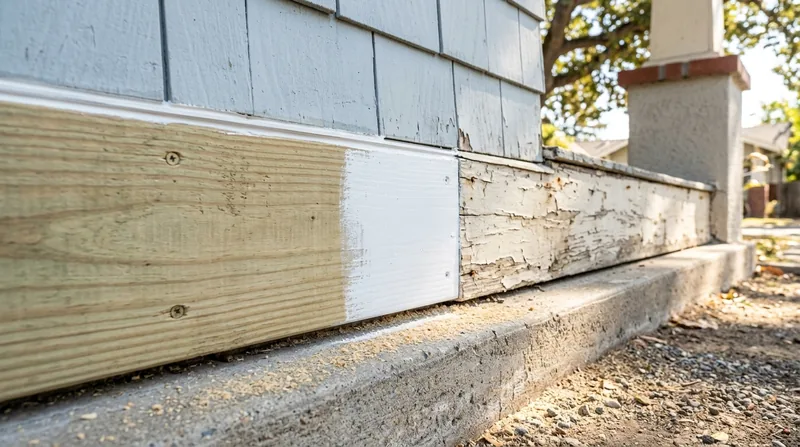




San Jose's Craftsman bungalows, Victorian estates in Willow Glen, and historic Queen Anne homes in Naglee Park are built on the flat Santa Clara Valley floor, where winter rains and lingering moisture from old irrigation systems create ideal conditions for wood rot and dry rot repair. The dry Mediterranean summers mask the damage that develops behind walls, under siding, and in shaded north-facing trim, only to emerge when the rains return. Dry rot spreads silently through framing lumber, sill plates, and rim joists, and unlike cosmetic fixes, true repair means cutting out the decay, treating the surrounding wood, and rebuilding with rot-resistant lumber. We work from your pest inspection report, remove all compromised framing and siding, and leave you with permanent structural integrity, not a temporary patch. Call us at (669) 202-8707 for a free estimate, or visit our contact page to request an inspection.
Why Wood Rot and Dry Rot Repair Matters in San Jose's Historic Neighborhoods
San Jose's building stock spans from the 1880s to today, and older homes built in Naglee Park, Rose Garden, and Japantown contain Douglas fir framing, redwood siding, and softwood trim that absorbs moisture from winter rains, roof leaks, failed gutters, and landscape irrigation that runs too close to foundations. Dry rot fungus requires moisture and time, both of which San Jose's seasonal pattern and shaded lot orientations provide in abundance. The longer decay goes unaddressed, the more structural members it compromises, and the more expensive the repair becomes. Early detection and removal of all decayed wood prevents spread to load-bearing walls, floor joists, and beams that support the entire home.
- We identify decay in sill plates, rim joists, and floor framing before it undermines foundation connections.
- We remove all softened or discolored wood and treat surrounding framing with a protective coat to halt fungal spread.
- We rebuild with pressure-treated lumber or naturally rot-resistant species that will outlast the original installation.
- We document the scope and condition for your insurance claim if the damage qualifies for coverage.
- We work from your pest control report and coordinate with any ongoing treatment or monitoring you have in place.
Addressing rot early avoids structural failure, maintains home value, and prevents the exponential costs that come with replacing joists, beams, or wall framing.
Key info: A Craftsman bungalow in Willow Glen with rot in the rim joist and sill plate typically costs $1,200 to $2,800 to repair, depending on how far the decay has spread and whether the subfloor needs reinforcement. The same job ignored for two more years can double or triple in scope and cost.
For more information on structural concerns that often accompany wood rot, see our guide to floor joist and subfloor repair.
How We Repair Wood Rot and Dry Rot in San Jose Homes
Our process starts with a thorough on-site inspection to map the extent of decay, identify the moisture source, and determine which framing members must be replaced versus treated. We do not perform pest control or fumigation, but we work from your pest inspection report and repair all wood damage once the source of moisture is understood. We cut out all decayed wood in clean lines, treat the surrounding sound wood with a fungicide, and install new framing using rot-resistant species or pressure-treated lumber that will not fail again under the same conditions.
- We inspect the full perimeter of affected framing and identify all areas where decay has begun to spread.
- We remove decayed wood using hand tools and power saws, working carefully to preserve adjacent structural members.
- We treat the surrounding wood to prevent fungal recolonization and stabilize the repair zone.
- We install new framing, sister joists to existing members where possible, or full replacement where decay has compromised load-bearing capacity.
- We seal the repair area and restore siding, trim, or interior finishes to match the existing home.
- We ensure all work complies with local building code and provide documentation for permits if required by your city.
The result is a permanent repair that restores full structural integrity and stops the decay at its source.
Real example: A 1920s Tudor Revival cottage in Campbell had rot in the exterior sill plate where a planter bed had been against the foundation for fifteen years. We removed the rotted sill, treated the rim joist above it, installed a new pressure-treated sill plate, and restored the exterior trim. The repair took three days and cost $1,650, well below the $4,500 it would have cost to replace the entire rim joist and subfloor if we had waited another year.
| Repair Approach | Description | Best For |
|---|---|---|
| Localized removal and replacement | Cut out decayed section, treat surrounding wood, install new pressure-treated lumber in the cavity | Rot confined to sill plates, trim boards, or short spans of non-load-bearing members |
| Sistering and reinforcement | Remove decay from a floor joist or beam, install a new pressure-treated sister member bolted alongside the existing framing | Load-bearing joists or beams where the existing member retains enough strength to share the load with a reinforcement |
| Full member replacement | Remove the entire compromised joist, beam, or wall stud and install a new pressure-treated or engineered lumber replacement | Decay that has consumed more than one third of a load-bearing member or where sistering is not structurally feasible |
| Protective treatment and monitoring | Remove decayed material, apply fungicide to surrounding wood, address the moisture source, and schedule follow-up inspections | Early-stage decay or situations where the moisture source can be eliminated and the remaining wood is sound |
Wood Rot and Dry Rot Repair Cost in San Jose: What to Expect
Wood rot repair in San Jose typically begins at around $650 for minor localized decay in trim or sill plates, but most residential jobs run between $1,200 and $3,500 depending on how much wood must be removed, whether load-bearing framing is involved, and how accessible the decay is. A rim joist repair might cost $1,800 to $2,500, while a full floor joist replacement can reach $3,000 to $4,500 if multiple members are affected. Large-scale structural repairs, such as replacing multiple joists or a beam, require an on-site estimate and may involve a structural engineer, which adds cost but ensures the repair meets code and supports the home safely.
Cost drivers include the extent of decay, the species and size of the members being replaced, access to the work area (crawl space versus exposed basement), and whether the repair requires a permit from the city. Getting two or three estimates from local carpenters helps you understand the scope and avoid overpaying for unnecessary replacement when repair is the honest answer. We include a free estimate and can explain exactly why a particular repair method is the most cost-effective choice for your home.
For a detailed pricing breakdown and current rates for common repairs, visit our full pricing page.
Wood Rot and Dry Rot Repair Near Me: What San Jose Homeowners Should Know When Hiring a Carpenter
Hiring the right carpenter for wood rot repair means choosing someone who understands the local building stock, explains the repair honestly, and does the work with the same crew that shows up for the estimate. Look for a contractor who is fully insured and can provide references from recent jobs in San Jose or nearby neighborhoods like Sunnyvale, Los Gatos, or Campbell. Ask to see examples of past repairs, not just replacements, and confirm that the contractor will work from your pest inspection report and coordinate with any ongoing pest monitoring you have in place.
- Verify that the contractor is fully insured and ask for a copy of the certificate of insurance before work begins.
- Request at least two or three detailed estimates that explain what wood will be removed, what will be replaced, and why that approach is necessary.
- Ask for references from homeowners in San Jose, Santa Clara, or Cupertino and follow up with at least one to discuss the quality of the work and how the contractor handled unexpected issues.
- Confirm whether the repair requires a permit from the city or county building department and understand who is responsible for pulling and scheduling inspections.
- If your home is in a historic district or an HOA-managed community, check whether exterior repairs need approval before work begins.
The best carpenter is one who explains what rot is, why it happened in your home, and what will prevent it from happening again, rather than one who rushes to replace everything. We are happy to discuss your repair options and answer questions about how we approach the work. Contact us at (669) 202-8707 or use our contact page to request a free, no-obligation estimate.
Wood Rot & Dry Rot Repair in San Jose: Pricing Guide
| Service | Price | Details |
|---|---|---|
| Minor dry rot or wood rot repair | Starting at $650 | Localized decay in trim, sill plates, or non-structural members, removal and replacement with rot-resistant lumber |
| Rim joist or sill plate repair | Starting at $1,200 | Removal of decayed sill or rim joist section, treatment of surrounding wood, installation of new pressure-treated framing |
| Floor joist repair or sistering | Starting at $1,800 | Removal of decay from load-bearing joist, installation of sister joist or full replacement, depends on joist span and load |
| Structural or multi-member repair | On estimate | Large-scale decay affecting multiple joists, beams, or wall framing requires on-site inspection to determine scope and cost |
| Travel and estimate | Free | No charge for estimate or travel to San Jose and surrounding areas, response within 24 hours at (669) 202-8707 |
Indicative pricing, the exact cost depends on square footage, finish, and site access. Free personalized estimate within 24h at (669) 202-8707.


